
Destination Sardinia
  • The island
    • History
    • Regions
    • Points of interest
    • Climate
    • Geography
    • Nature
    • Beaches
    • Festivals
    • Language
  • Travel time
  • Arrival
    • Car/Motorbike
    • Ferry
    • Plane
    • Train
  • Accommodation
    • Hotel
    • Bed and Breakfast
    • Holiday flat
    • Holiday house
    • Agriturismo
    • Camping
    • Campervan
  • Food and Drinks
    • Eating out
    • Self-catering
    • Culinary specialities
  • Mobility
    • Car
    • Motorbike
    • Bike
    • Bus
    • Railway
    • Ship and boat
  • Points of interest
  • Activities
    • Hiking
    • – Tour tips
    • Climbing
    • Surfing
    • Diving and snorkelling
    • Fishing
    • Riding
  • Pract. tips
    • Literature
    • Maps
    • Language
    • Post and telephone
    • Internet
    • Opening hours
    • Photography
    • Children
    • Health
    • Dogs and pets
    • Souvenirs
    • Weblinks
  • Menu Menu
  • The island
    • The island
    • History
    • Regions
      • Anglona/Turritano
      • Arborea
      • Barbagia
      • Baronia
      • Cagliari region
      • Campidano
      • Gallura
      • Iglesiente/Sulcis
      • Logudoro/Meilogu
      • Nurra
      • Ogliastra
      • Planargia
      • Quirra/Sarrabus
      • Sarcidano/Marmilla
    • Points of interest
      • Alghero
      • Alghero, north
      • Archipelago di La Maddalena
      • Ardara / Sant‘ Antioco di Bisarcio
      • Argentiera / Grotta di Nettuno
      • Aritzo
      • Arzachena and surroundings
      • Bosa
      • Burgos and surroundings
      • Cagliari
      • Capo Comino / Spiaggia di Berchida
      • Carbonia and Monte Sirai
      • Castelsardo and surroundings
      • Churches near Sassari
      • Costa del Sud
      • Costa Rei and hinterland
      • Costa Smeralda, Palau and surroundings
      • Costa Verde
      • Fonni and surroundings
      • Fordongianus
      • Giara di Gesturi
      • Gola su Gorroppu / Codula di Luna
      • Gulf of Orosei
      • Iglesias and Grotta di San Giovanni
      • Ingurtosu
      • Isola di Sant’Antioco
      • Is Pirois, Funtana Coberta, Pranu Muteddu
      • Ittireddu
      • Macomer and surroundings
      • Montiferru-Area
      • Nebida, Masua and Buggerru
      • Nora
      • Nuoro and surroundings
      • Nuraghe Arrubiu
      • Nuraghe Iloi and surroundings
      • Nuraghe Losa
      • Nuraghe Santu Antine / Sant‘ Andria Priu
      • Nuraghe Su Nuraxi
      • Olbia and surroundings
      • Orgosolo
      • Oristano / Sinis-Peninsula / Tharros
      • Orosei and Biderosa Nature Park
      • Orosei’s hinterland
      • Osini and Ulassai
      • Ozieri
      • Porto Torres and Monte d’Accoddi
      • Posada and Surroundings
      • Sadali
      • Santa Cristina
      • Santa Teresa / Capo Testa
      • Santa Vittoria
      • Sassari and Noeddale Necropolis
      • Sedini and Martis
      • Siniscola and Surroundings
      • Stintino and Isola Asinara
      • Su Golgo, Sa Pedra Longa, Santa Maria Navarrese
      • Su Romanzesu and Nuraghe Loelle
      • Su Tempiesu and Nuraghe Noddule
      • Tempio di Antas
      • Tempio Pausania and Surroundings
      • Tonara, Sorgono, San Mauro, Menhire Biru ‚e Concas
      • Trenino Verde (Arbatax-Sadali)
    • Climate
    • Geography
    • Nature
    • Beaches
    • Festivals
    • Language
  • Travel time
  • Arrival
    • Arrival
    • Car/Motorbike
    • Ferry
    • Plane
    • Train
  • Accommodation
    • Accommodation
    • Hotel
    • Campervan
    • Agriturismo
    • Bed and Breakfast
    • Camping
    • Holiday house
    • Holiday flat
  • Food and Drinks
    • Food and Drinks
    • Eating out
    • Self-catering
    • Culinary specialities
  • Mobility
    • Mobility
    • Car
    • Motorbike
    • Bike
    • Bus
    • Railway
    • Ship and boat
  • Points of interest
    • Alghero
    • Alghero, north
    • Archipelago di La Maddalena
    • Ardara / Sant‘ Antioco di Bisarcio
    • Argentiera / Grotta di Nettuno
    • Aritzo
    • Arzachena and surroundings
    • Bosa
    • Burgos and surroundings
    • Cagliari
    • Capo Comino / Spiaggia di Berchida
    • Carbonia and Monte Sirai
    • Castelsardo and surroundings
    • Churches near Sassari
    • Costa del Sud
    • Costa Rei and hinterland
    • Costa Smeralda, Palau and surroundings
    • Costa Verde
    • Fonni and surroundings
    • Fordongianus
    • Giara di Gesturi
    • Gola su Gorroppu / Codula di Luna
    • Gulf of Orosei
    • Iglesias and Grotta di San Giovanni
    • Ingurtosu
    • Isola di Sant’Antioco
    • Is Pirois, Funtana Coberta, Pranu Muteddu
    • Ittireddu
    • Macomer and surroundings
    • Montiferru-Area
    • Nebida, Masua and Buggerru
    • Nora
    • Nuoro and surroundings
    • Nuraghe Arrubiu
    • Nuraghe Iloi and surroundings
    • Nuraghe Losa
    • Nuraghe Santu Antine / Sant‘ Andria Priu
    • Nuraghe Su Nuraxi
    • Olbia and surroundings
    • Orgosolo
    • Oristano / Sinis-Peninsula / Tharros
    • Orosei and Biderosa Nature Park
    • Orosei’s hinterland
    • Osini and Ulassai
    • Ozieri
    • Porto Torres and Monte d’Accoddi
    • Posada and Surroundings
    • Sadali
    • Santa Cristina
    • Santa Teresa / Capo Testa
    • Santa Vittoria
    • Sassari and Noeddale Necropolis
    • Sedini and Martis
    • Siniscola and Surroundings
    • Stintino and Isola Asinara
    • Su Golgo, Sa Pedra Longa, Santa Maria Navarrese
    • Su Romanzesu and Nuraghe Loelle
    • Su Tempiesu and Nuraghe Noddule
    • Tempio di Antas
    • Tempio Pausania and Surroundings
    • Tonara, Sorgono, San Mauro, Menhire Biru ‚e Concas
    • Trenino Verde (Arbatax-Sadali)
  • Activities
    • Activities
    • Hiking
    • – Tour tips
    • Climbing
    • Surfing
    • Diving and snorkelling
    • Fishing
    • Riding
  • practical tips
    • practical tips
    • Literature
    • Maps
    • Language
    • Post and telephone
    • Internet
    • Opening hours
    • Photography
    • Children
    • Health
    • Dogs and pets
    • Souvenirs
    • Weblinks
  • Search…
You are here: Home1 / The island2 / Points of interest3 / Carbonia and Monte Sirai

deutsch

Carbonia and Monte Sirai

map of Carbonia and Monte Sirai

Carbonia
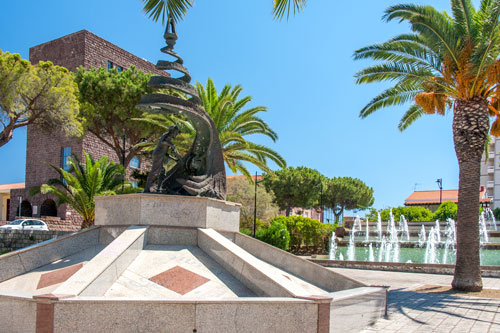
Carbonia, Park

Carbonia is a very young city. It was founded on November 5, 1937, by King Victor Emmanuel III. Benito Mussolini delivered the inaugural speech here on December 18, 1938.
Under Mussolini’s leadership, mining in Sardinia experienced a significant boom. This led to a brief period of interest in the extraction of the actually inferior-quality lignite.
Carbonia was designed as a purely mining town and built in a very short time. Compared to other Sardinian cities, Carbonia appears much more open, green, and modern.

Due to its short history, Carbonia is not very interesting from a tourist perspective, but it offers good shopping opportunities and beautiful parks.

Piazza Roma
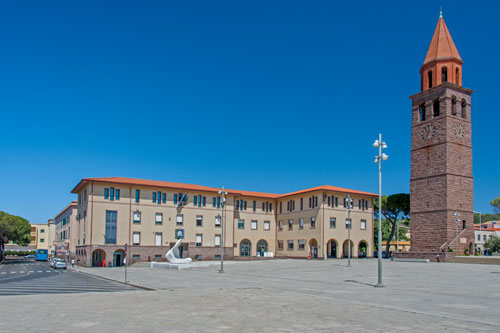
Piazza Roma

The central square of Carbonia is completely paved with granite slabs and, with its surrounding buildings, is a typical example of fascist architecture from the 1930s.
On the northwest side of the square stands the town hall, next to it a bell tower made of trachyte.

By the late 1940s, Carbonia had around 60,000 inhabitants. However, due to the poor quality of the local lignite, sustainable economic mining was impossible, leading to the closure of more and more mines.
Many of the migrant workers left the city, and the population dropped to around 30,000 inhabitants.

The large museum “Centro Italiano della Cultura del Carbone” has been established in the former Serbariu mine, which provides information about the history of mining. There is an exhibition of mining technology, and a tunnel can be visited.

Torre Civica
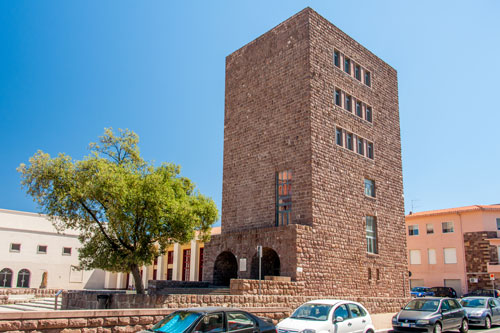
Torre Civica

The five-story building on the southeast side of Piazza Roma was built in 1937/38 from trachyte and was called Torre Littoria. It originally served as the headquarters of the Fascist Party. Mussolini delivered his inaugural speech for the emerging city from the balcony on the first floor.
After the end of fascism, almost all symbols of the dictatorship were removed. A relief depicting the life of the “perfect fascist” is still preserved on the ground floor.

In 1943, the tower was occupied by the Partito Sardo d’Azione (Sardinian Action Party) and remained the party’s headquarters until 2002. Later, the rooms were renovated, and the tower was renamed “Torre Civica.” Today, it houses various offices of the municipal administration.

Monte Sirai
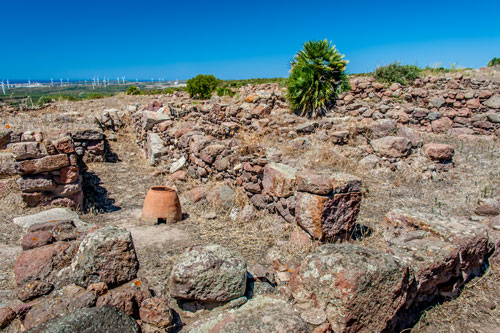
Monte Sirai

This mountain is located a few kilometers northwest of Carbonia. The summit is easily accessible by car, although the turnoff on the SS 126 is poorly signposted.
Monte Sirai is a table mountain of volcanic origin, rising nearly 200 meters above the surrounding area.
From the top, you have a magnificent view of the neighboring Carbonia as well as the offshore islands of Sant’Antioco and San Pietro.

Due to its strategically advantageous location, the mountain had been inhabited by the Nuragic people.
Around 750 BC, the Phoenicians established a settlement here. This was destroyed around 530 BC and subsequently rebuilt by the Punics. Later, fortifications were also built.
Excavations have been conducted here since 1963.
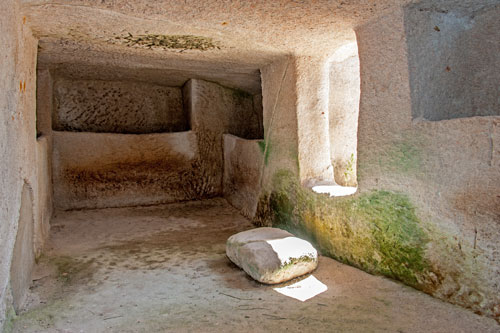
Monte Sirai, Grabkammer

The necropolis is located a bit below the mountain peak, where it was possible to carve chambers due to the softer rock. Among the Punics, it was customary to bury the dead as intact as possible. Later, family tombs for several generations were also constructed.

This necropolis consists of 14 chamber tombs, a children’s necropolis, and several individual graves. The latter were probably intended for the wealthy.
Sarcophagi were hollowed out on the sides of the square or rectangular chambers. Grave goods included pottery and personal items such as seals, jewelry, and amulets.
Children were buried in amphorae inserted into the walls of the chambers.
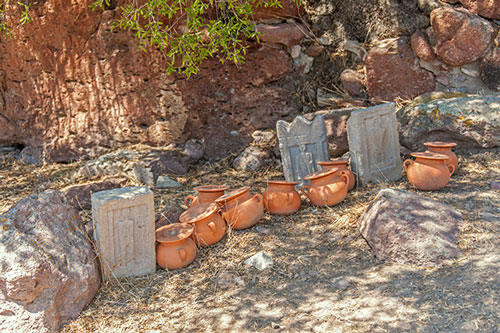
Monte Sirai, Tofet

The Tophet was established during Punic times around 360 BC. The foundation walls of the central temple are still preserved.
The sanctuary served as a burial ground for children who died before they could be fully integrated into the community. During the burial rites, prayers were offered to the god Baal Hammon and his consort Tinnit for assistance.
The children were interred in special urns, of which approximately 400 have been excavated so far.
Towards the end of the 4th century BC, offerings began to be made to the deities – as thanks for a newborn or as an appeal for intervention. These offerings took the form of votive steles depicting a deity, likely Baal or Tinnit.

Search Search

Instagram

Follow us

Legal Notice

Legal Notice

Privacy Policy

Privacy Policy

Contact

Contact

© Copyright Traumziel-Sardinien 2009-2026
Scroll to top Scroll to top Scroll to top