
Destination Sardinia
  • The island
    • History
    • Regions
    • Points of interest
    • Climate
    • Geography
    • Nature
    • Beaches
    • Festivals
    • Language
  • Travel time
  • Arrival
    • Car/Motorbike
    • Ferry
    • Plane
    • Train
  • Accommodation
    • Hotel
    • Bed and Breakfast
    • Holiday flat
    • Holiday house
    • Agriturismo
    • Camping
    • Campervan
  • Food and Drinks
    • Eating out
    • Self-catering
    • Culinary specialities
  • Mobility
    • Car
    • Motorbike
    • Bike
    • Bus
    • Railway
    • Ship and boat
  • Points of interest
  • Activities
    • Hiking
    • – Tour tips
    • Climbing
    • Surfing
    • Diving and snorkelling
    • Fishing
    • Riding
  • Pract. tips
    • Literature
    • Maps
    • Language
    • Post and telephone
    • Internet
    • Opening hours
    • Photography
    • Children
    • Health
    • Dogs and pets
    • Souvenirs
    • Weblinks
  • Menu Menu
  • The island
    • The island
    • History
    • Regions
      • Anglona/Turritano
      • Arborea
      • Barbagia
      • Baronia
      • Cagliari region
      • Campidano
      • Gallura
      • Iglesiente/Sulcis
      • Logudoro/Meilogu
      • Nurra
      • Ogliastra
      • Planargia
      • Quirra/Sarrabus
      • Sarcidano/Marmilla
    • Points of interest
      • Alghero
      • Alghero, north
      • Archipelago di La Maddalena
      • Ardara / Sant‘ Antioco di Bisarcio
      • Argentiera / Grotta di Nettuno
      • Aritzo
      • Arzachena and surroundings
      • Bosa
      • Burgos and surroundings
      • Cagliari
      • Capo Comino / Spiaggia di Berchida
      • Carbonia and Monte Sirai
      • Castelsardo and surroundings
      • Churches near Sassari
      • Costa del Sud
      • Costa Rei and hinterland
      • Costa Smeralda, Palau and surroundings
      • Costa Verde
      • Fonni and surroundings
      • Fordongianus
      • Giara di Gesturi
      • Gola su Gorroppu / Codula di Luna
      • Gulf of Orosei
      • Iglesias and Grotta di San Giovanni
      • Ingurtosu
      • Isola di Sant’Antioco
      • Is Pirois, Funtana Coberta, Pranu Muteddu
      • Ittireddu
      • Macomer and surroundings
      • Montiferru-Area
      • Nebida, Masua and Buggerru
      • Nora
      • Nuoro and surroundings
      • Nuraghe Arrubiu
      • Nuraghe Iloi and surroundings
      • Nuraghe Losa
      • Nuraghe Santu Antine / Sant‘ Andria Priu
      • Nuraghe Su Nuraxi
      • Olbia and surroundings
      • Orgosolo
      • Oristano / Sinis-Peninsula / Tharros
      • Orosei and Biderosa Nature Park
      • Orosei’s hinterland
      • Osini and Ulassai
      • Ozieri
      • Porto Torres and Monte d’Accoddi
      • Posada and Surroundings
      • Sadali
      • Santa Cristina
      • Santa Teresa / Capo Testa
      • Santa Vittoria
      • Sassari and Noeddale Necropolis
      • Sedini and Martis
      • Siniscola and Surroundings
      • Stintino and Isola Asinara
      • Su Golgo, Sa Pedra Longa, Santa Maria Navarrese
      • Su Romanzesu and Nuraghe Loelle
      • Su Tempiesu and Nuraghe Noddule
      • Tempio di Antas
      • Tempio Pausania and Surroundings
      • Tonara, Sorgono, San Mauro, Menhire Biru ‚e Concas
      • Trenino Verde (Arbatax-Sadali)
    • Climate
    • Geography
    • Nature
    • Beaches
    • Festivals
    • Language
  • Travel time
  • Arrival
    • Arrival
    • Car/Motorbike
    • Ferry
    • Plane
    • Train
  • Accommodation
    • Accommodation
    • Hotel
    • Campervan
    • Agriturismo
    • Bed and Breakfast
    • Camping
    • Holiday house
    • Holiday flat
  • Food and Drinks
    • Food and Drinks
    • Eating out
    • Self-catering
    • Culinary specialities
  • Mobility
    • Mobility
    • Car
    • Motorbike
    • Bike
    • Bus
    • Railway
    • Ship and boat
  • Points of interest
    • Alghero
    • Alghero, north
    • Archipelago di La Maddalena
    • Ardara / Sant‘ Antioco di Bisarcio
    • Argentiera / Grotta di Nettuno
    • Aritzo
    • Arzachena and surroundings
    • Bosa
    • Burgos and surroundings
    • Cagliari
    • Capo Comino / Spiaggia di Berchida
    • Carbonia and Monte Sirai
    • Castelsardo and surroundings
    • Churches near Sassari
    • Costa del Sud
    • Costa Rei and hinterland
    • Costa Smeralda, Palau and surroundings
    • Costa Verde
    • Fonni and surroundings
    • Fordongianus
    • Giara di Gesturi
    • Gola su Gorroppu / Codula di Luna
    • Gulf of Orosei
    • Iglesias and Grotta di San Giovanni
    • Ingurtosu
    • Isola di Sant’Antioco
    • Is Pirois, Funtana Coberta, Pranu Muteddu
    • Ittireddu
    • Macomer and surroundings
    • Montiferru-Area
    • Nebida, Masua and Buggerru
    • Nora
    • Nuoro and surroundings
    • Nuraghe Arrubiu
    • Nuraghe Iloi and surroundings
    • Nuraghe Losa
    • Nuraghe Santu Antine / Sant‘ Andria Priu
    • Nuraghe Su Nuraxi
    • Olbia and surroundings
    • Orgosolo
    • Oristano / Sinis-Peninsula / Tharros
    • Orosei and Biderosa Nature Park
    • Orosei’s hinterland
    • Osini and Ulassai
    • Ozieri
    • Porto Torres and Monte d’Accoddi
    • Posada and Surroundings
    • Sadali
    • Santa Cristina
    • Santa Teresa / Capo Testa
    • Santa Vittoria
    • Sassari and Noeddale Necropolis
    • Sedini and Martis
    • Siniscola and Surroundings
    • Stintino and Isola Asinara
    • Su Golgo, Sa Pedra Longa, Santa Maria Navarrese
    • Su Romanzesu and Nuraghe Loelle
    • Su Tempiesu and Nuraghe Noddule
    • Tempio di Antas
    • Tempio Pausania and Surroundings
    • Tonara, Sorgono, San Mauro, Menhire Biru ‚e Concas
    • Trenino Verde (Arbatax-Sadali)
  • Activities
    • Activities
    • Hiking
    • – Tour tips
    • Climbing
    • Surfing
    • Diving and snorkelling
    • Fishing
    • Riding
  • practical tips
    • practical tips
    • Literature
    • Maps
    • Language
    • Post and telephone
    • Internet
    • Opening hours
    • Photography
    • Children
    • Health
    • Dogs and pets
    • Souvenirs
    • Weblinks
  • Search…
You are here: Home1 / The island2 / Points of interest3 / Tonara, Sorgono, San Mauro, Menhirs of Biru ‘e Concas

deutsch

Tonara, Sorgono, San Mauro, Menhirs of Biru ‘e Concas

map with the marked sights

Tonara
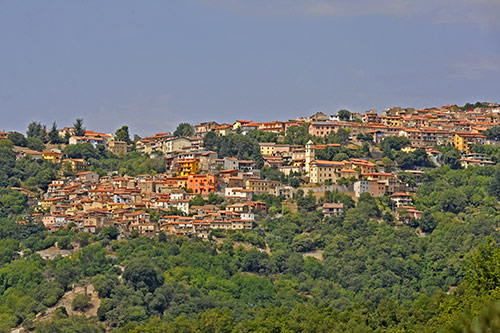
TonaraThe mountain village of Tonara spreads out on a hillside amidst dense forests.
Tonara is famous throughout Sardinia for its “Torrone,” a type of light, very sweet nougat made from honey, egg whites, and various nuts, also offered at festivals in other Sardinian towns.
Since 1979, the Sagra del Torrone has been held here at Easter. On the village square, torrone is traditionally prepared in a large copper kettle. The festival has become one of the largest in Sardinia, featuring traditional costumes, crafts, and products for sale. Folklore and dance events attract many visitors.
To meet the demand for torrone inside and outside of Sardinia, several local companies now produce the nougat.
Other typical products include campanacci – small bells hung on sheep, goats, and cows, whose ringing can be heard all over Sardinia.

Sorgono
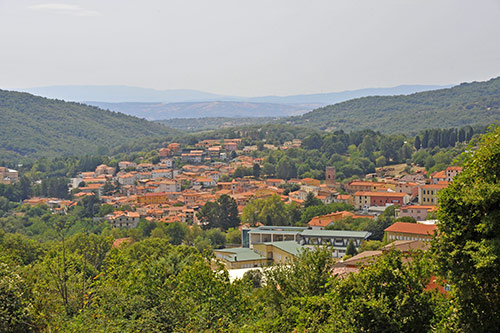
SorgonoSorgono is the main town in the Barbagia Mandrolisai. The wooded and rugged mountain landscape here transitions into gentle hills.
The town is the endpoint of the Cagliari-Mandas-Isili-Sorgono railway line. The construction of the narrow-gauge railway in the 19th century enabled the opening up of the mountain villages in Barbagia. However, nowadays, only the tourist train “Trenino Verde” runs on this route.
Sorgono is famous throughout Sardinia for its wine – Mandrolisai, which is only produced here.
In the surrounding area, there are numerous archaeological sites, the most famous being “Biru ’e Concas” with its menhirs.

San Mauro
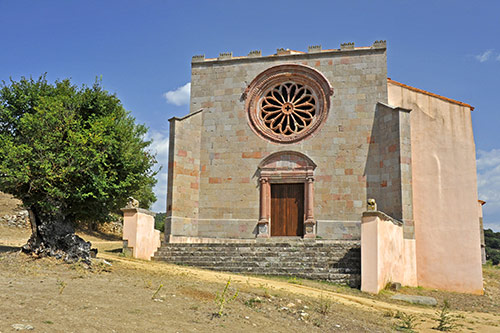
San MauroThe Church of San Mauro is located about 6 km west of Sorgono, directly on the SS 388. (see map)
It is one of the oldest pilgrimage sites in Sardinia.
The building dates back to the 16th century and was built in the Gothic-Aragonese style. On the walls to the right and left of the staircase sit two weathered trachyte lions holding the coat of arms of Aragon.
The most striking feature is the 4.5 m large rose window above the entrance. The interior is relatively simple, but like almost all rural churches in Sardinia, it is usually closed.
At the end of May/beginning of June, a huge festival is held here in honor of San Mauro. It is one of the largest festivals on the island. In addition to religious events, there are dance performances, agricultural products, and much more.
Until about 40 years ago, the Sagra di San Mauro lasted for 9 days and attracted farmers from all over Sardinia. Each 3-day segment was dedicated to cattle, sheep, and horse fairs.

The Menhirs of Biru ’e Concas
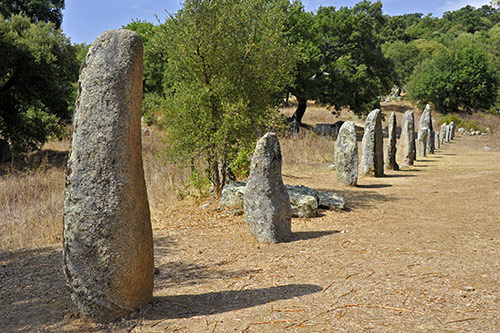
Menhirs of Biru ’e ConcasThe menhirs of Biru ’e Concas form the largest group of menhirs in Sardinia.
The park-like area is about 5 hectares and can be visited individually. Marked paths lead to interesting points where information boards (in Italian) are posted.
Due to agricultural use of the area for centuries, the menhirs were toppled and damaged over time.
In 2010/11, the site was systematically restored on the initiative of the responsible ministry. Many menhirs, either overgrown by vegetation or buried, were uncovered.
About 150 of these stones were found here. They are arranged individually, in circles, in pairs, or in long rows.
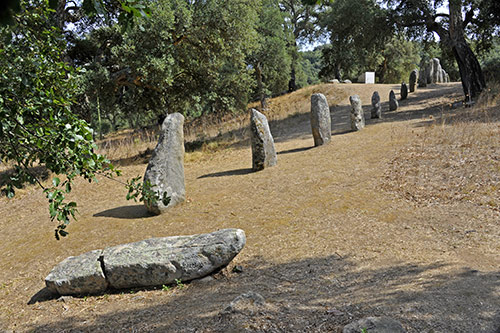
Menhirs of Biru e’ Concas

The term “menhir” comes from the Breton language and means “long stone.” In Sardinian, they are called perdas fittas or perdas ficchidas.
These stones were long part of pagan rituals that the Catholic Church could not completely abolish during the Christianization of Sardinia. Some of these rituals persisted into the 20th century.
For instance, the stones have always been a symbol of fertility. According to tradition, women would go to the menhirs at night in the moonlight. They would smear the rock and their bellies with a special ointment and then rub their lower abdomens against the stones to increase fertility.

The Biru ’e Concas site was created during the Neolithic period around 3200-2200 BC.
Excavations have uncovered artifacts from pre-Nuragic, Nuragic, and Roman times.
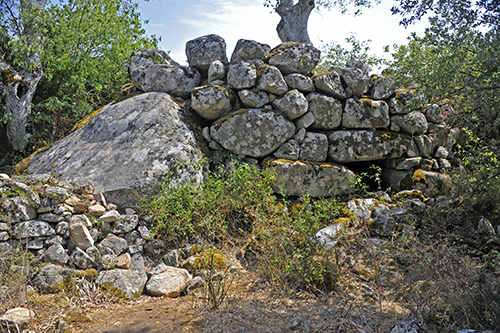
Biru e’ Concas, Nuraghe

At the highest point in the northwest corner of the area are the remains of a Nuraghe. In its vicinity, there was also a settlement whose houses were built from large boulders. The abundant water here favored a larger settlement. The placement of the menhirs began during the Copper Age. At that time, it became common to mark important places with these standing stones, highlighting the significance of Biru ’e Concas.

How to get there: Coming from Sorgono, follow the SS 388 and pass the Church of San Mauro after 6 km.
After another kilometer, a road to Austis branches off to the right. Here, stay on the SS 388, and you can park directly after the junction on the right side of the road next to a stone wall.

Search Search

Instagram

Follow us

Legal Notice

Legal Notice

Privacy Policy

Privacy Policy

Contact

Contact

© Copyright Traumziel-Sardinien 2009-2026
Scroll to top Scroll to top Scroll to top